
A scientific look at traffic and car culture
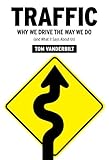

It turns out that traffic engineering is not rocket science. It's way more complicated than that.
For example, road capacity is directly related to the demand for road capacity. In other words, if traffic engineers put in a new lane or road to ease congestion on an existing road, they will be confounded by a number of new drivers on that road. Adding to capacity somehow adds to the number of drivers using it (and vice versa: when roads or lanes are removed, for instance by construction, demand falls). This peculiar phenomenon stems from the fact that drivers are independent beings who make choices based on what is available to them. If a road is too crowded, some will choose to make fewer trips (perhaps telecommuting or combining errands into one trip). If new capacity becomes available, some will choose to make more trips (perhaps not making the effort of combining errands into a single trip).
I have some questions for you, dear reader, and would love it if you shared your thoughts in the comments below.
- What are your traffic pet peeves? What driver behaviors and road conditions drive (hah) you crazy?
- Do you think you are an average driver, in terms of skill and safety? Below or above average? Why?
- What do you think of the use of the horn? Is it always rude? When is it not rude?
- And where do you do most of your driving? I'm wondering about geography, since traffic culture varies widely among locations. New York drivers are very different from London drivers or Salt Lake City drivers.
Conquering a sinful habit
When it comes to faith, my writing style tends toward explication -- some would say pontification. I have the heart of a teacher.
But it's also a lot easier to be intellectual about faith than to examine my own heart. To be honest, I find it difficult and confusing, even after some 25 years since I learned what an examination of conscience is. Deliberate, conscious sins -- the big incidents -- are easy, but finding the little habits, the assumptions, the selfishness, that's hard. These aren't even day-to-day sins; they're minute-to-minute sins. Reading about St. Francis of Assisi, my confirmation saint, helped me become aware that they are there, but they are hard to see. To make things worse, new ones like to sneak in. I have to always keep my guard up.
What makes this really challenging, though, is the flip side: it's easy to go too far, to think of a thing (a habit, say) as being sinful when it isn't. Scrupulosity is a sly poison. And when you have a sinful habit, and you are praying and trying as hard as you can and you still keep slipping up, how much guilt do you bear?
I don't know the answers, but I have learned a thing or two (the hard way) about breaking a sinful habit. I used to struggle with my driving habits. That's a nice way to say that I used to be a serious road rager.
I yelled and cursed, I made rude gestures, I cut people off, I refused to let them pass me. I absolutely could not stand it if another car got in my way. I thought I was a better and faster driver than everyone else, and if someone passed me, it was like a challenge to my supremacy. It even put a strain on my marriage, as my husband didn't like to be in the car when I was driving (and I didn't like to let him drive because he was too slow and meek).
When I felt that anger coming on while on the road, I used to try everything I could to suppress it. I prayed, only to have a curse fly out in the middle of the prayer; I took deep breaths, only to hit the accelerator to keep from being passed; I tried to distract myself, only to have my attention jerked back to the offending car.
I would break down in tears of guilt after every serious episode, and they happened at least every other trip.
God answers our prayers in ways we don't anticipate. (After all, if we were smart enough to know what to do, we wouldn't need his help.) Mine was answered while reading the blog Waiter Rant. (I can't find the post in the archives despite all my mad skilz with Google.)
Waiter had written about driving home from work one night and getting into a conflict with another driver. He described the feeling, very familiar to me, of fury welling up as the other car whipped aggressively past him. And then he wrote that a new thought suddenly popped into his mind: "I don't have to win."
Reading that was like seeing the clouds part after forty days of rain. Was that the solution to my problem? I tried it out. The next time I got angry on the highway, I remembered Waiter and said to myself, "It's okay. I don't have to win." And the SUV zoomed past, and I didn't win, and nothing bad happened. It was true: I don't have to win!
I wasn't cured overnight, but by changing how I thought about other drivers' behavior, I changed how I reacted. Instead of trying to smother my anger, I was not getting angry at all. Instead of feeling personally attacked (yes, attacked is how I felt) when another car tried to "win" on the road, I felt content to choose to let that driver win.
I don't think I would ever have figured out by myself that I had to change my thinking, rather than my behavior. God is so willing to tell us what to do when we open our ears to listen.

Subscribe to...


 Posts
All Comments
Posts
All Comments


